
Etiquette Today: To Correct Someone or Not
We look at an excerpt from our Business Etiquette book to explore how to handle name, title, and pronoun corrections, whether you're the offender or the offended.

What’s in A Name?
Today, we take a look at an excerpt from our latest book, Emily Post’s Business Etiquette, to explore how to handle corrections around identity (names, titles, and pronouns), both when you’re the one who’s been misidentified and when you’re the offender. The following can be found on pages 152 and 153 of Emily Post’s Business Etiquette. (This book makes for an excellent graduation gift, and signed copies can be ordered through our favorite book shop, Bridgeside Books.
WHEN SOMEONE GETS IT WRONG
The choice to make a correction or not is entirely up to the person who was misidentified. The moment and the mishap will determine what you decide to do, but remember that it’s normal to get things wrong from time to time. Knowing how to issue a proper correction, whether you’re the offender or the offended, can help smooth over the awkwardness.
IF YOU MISIDENTIFY SOMEONE ELSE AND THEY SPEAK UP: Keep your response kind and concerned, and keep the fault on you, not the other person. Let’s say you mispronounce a name; upon receiving a correction, say the name correctly and thank the person for the correction. “I’m sorry; thank you for the correction, Deborah [pronounced as the person has pronounced it].”
IF SOMEONE INCORRECTLY IDENTIFIES YOU: You may choose whether to correct them in the moment (“Sorry, it’s Deb-ohr-ah,” or “Pardon me, my name is pronounced Deb-OHR-ah”) or later on (“I didn’t mention it during the introduction, but I should let you know that my name is Deborah, instead of Debra”). “Instead of” is softer language than “not Debra.” Small tweaks can make a big difference in how corrections are received.
DON’T LET IT GO TOO LONG: If you have a colleague or work acquaintance whose name you repeatedly get wrong, it’s time to set aside the excuses and learn how to say it right. Find examples of the correct pronunciation, write the name down phonetically, and/or rhyme it with something to help remind you. Above all, practice until it feels comfortable and sounds right. It is the height of politeness, and it is necessary to respecting this person.
PRO TIP: If your name is difficult for people to hear or pronounce, it’s helpful to have a “sounds like” example to help people you meet.
Do you have an easily misunderstood name? (Lizzie often has people thinking her name is Libby or Lindsay when they first hear it.) How do you handle correcting others? Are there times when you just let it go? Let us know in the comments below! Can’t post here? Sign up for our paid subscription and join the conversation.
Help Emily Post Publish Quality Content
With your paid Community Membership, the Emily Post Institute can continue providing advice for years to come. Please consider joining today!
Give the Gift of Etiquette!
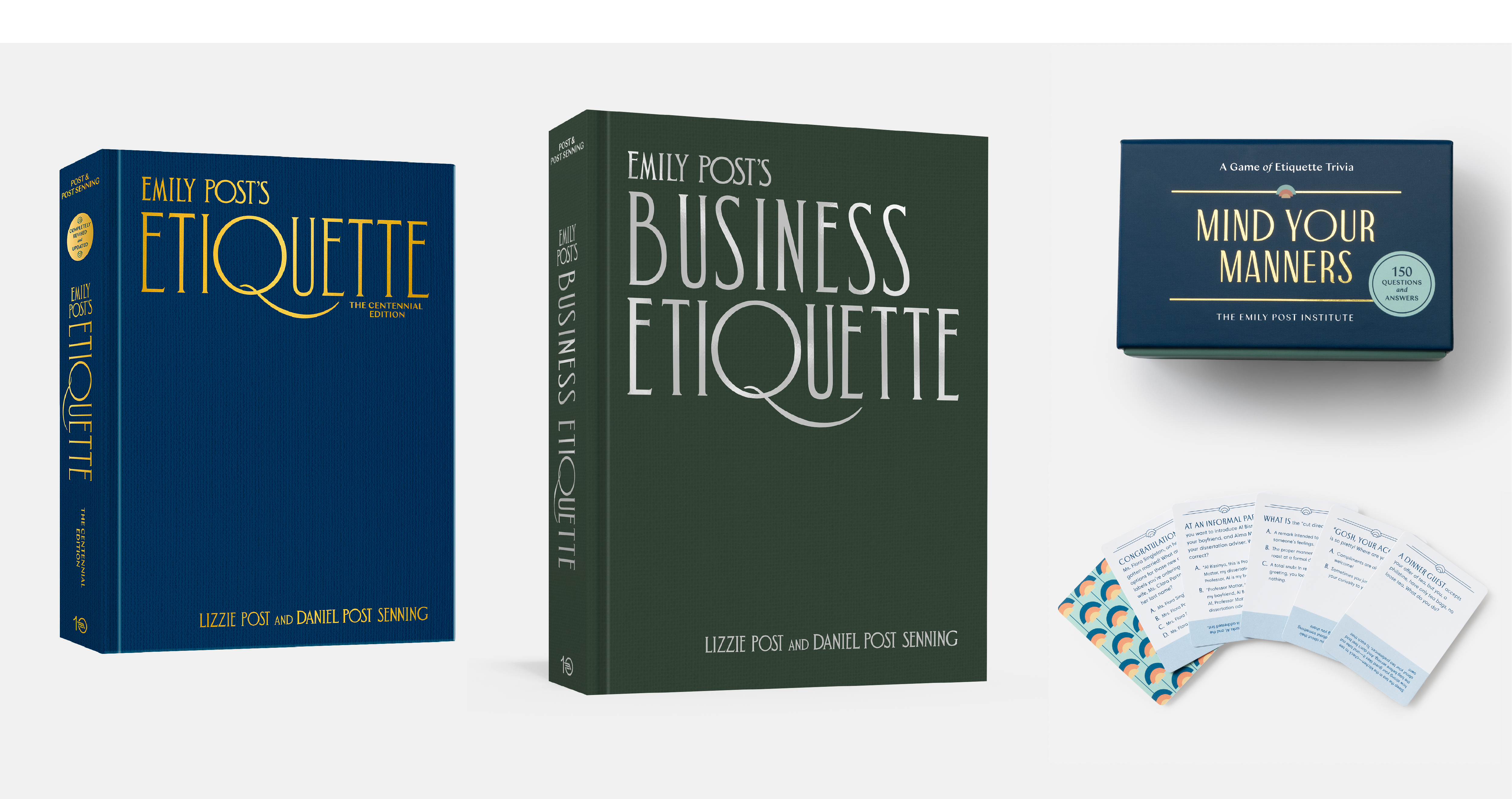
What better way to help someone who wants to improve their life than by giving them the gift of etiquette? SIGNED COPIES OF OUR LATEST BOOKS AND TRIVIA GAME are available from our local partner, Bridgeside Books, who can also secure copies of our other titles. Check out the Emily Post Collection there; there are so many options for great gifts!
Thank you for spending some time with us today! We really appreciate your interest in etiquette, manners, and civility, and how to cultivate them in today’s world. We hope you enjoyed this installment of Etiquette Today.
If you haven’t heard this week’s podcast, you can listen here. Paid subscribers can check out our Substack LIVES! where we answer one question from the podcast live on Substack. Recordings are available on our YouTube channel as well.
Keep an eye out for the Saturday Sip with its Emily Post Cookbook recipe!
Until then,
Lizzie and Dan