
Etiquette Throwback 1922: Leaving the Table
In our latest piece in the Formal Dinner series, Emily discusses leaving the table

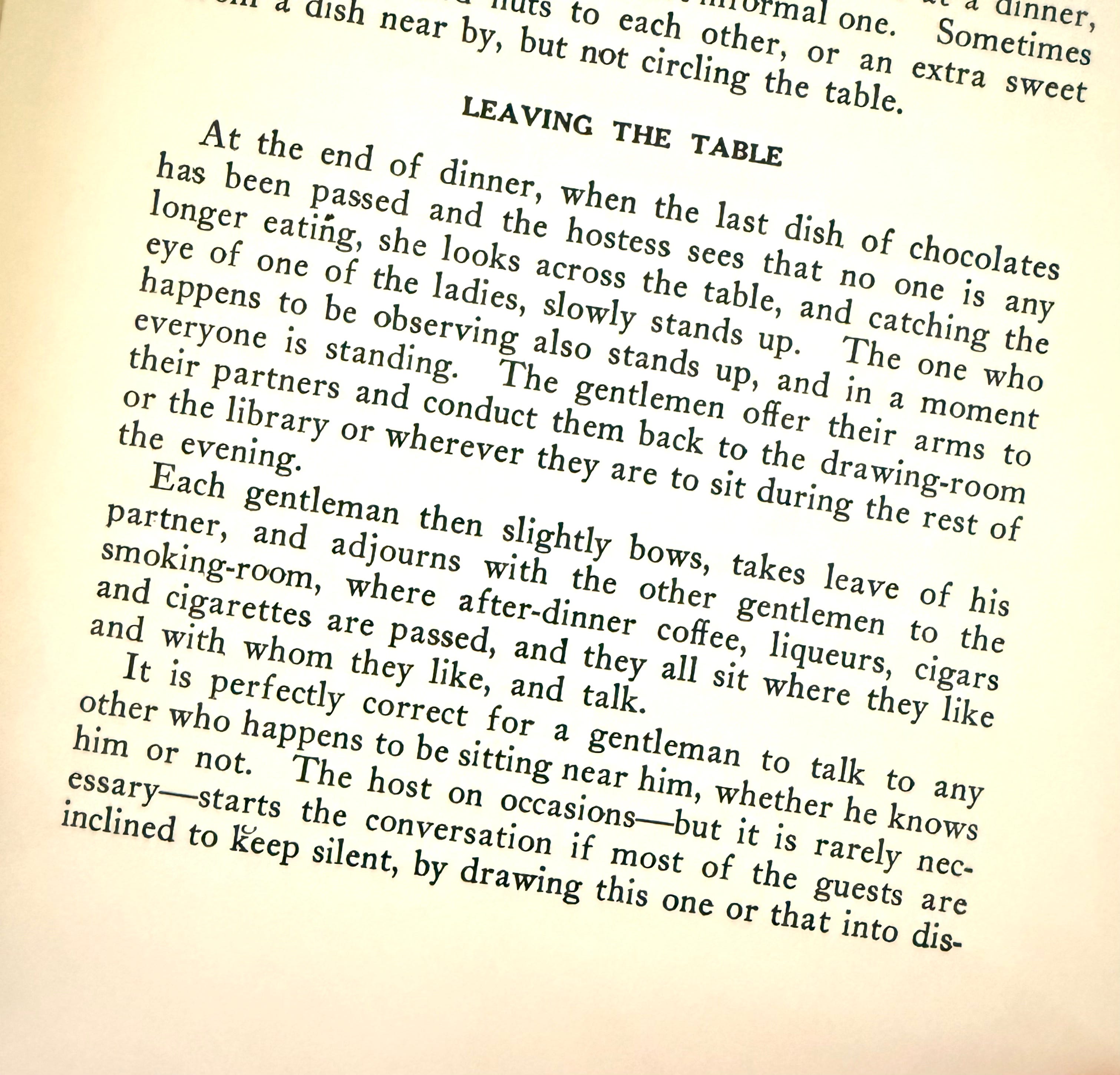
Etiquette, 1922, Leaving the Table
We’re getting to the end of our series on Formal Dinners from Emily’s 1922 edition of Etiquette, but we aren’t finished yet! In the chapter where Emily tackles leaving the table twice, we’ll take a look at both. In this version, she describes the end of the meal and where guests retire afterward. Let’s dive in!
*Please note that the grammar, spelling, and attitude in the following excerpt follow early 20th-century standards, and we have included the excerpt as is, with any typos that were printed in the book at the time.
FORMAL DINNERS
Leaving The Table
pg 223-224
LEAVING THE TABLE
At the end of dinner, when the last dish of chocolates has been passed and the hostess sees that no one is any longer eating, she looks across the table, and catching the eye of one of the ladies, slowly stands up. The one who happens to be observing also stands up, and in a moment everyone is standing. The gentlemen offer their arms to their partners and conduct them back to the drawing-room or the library or wherever they are to sit during the rest of the evening.
Each gentleman then slightly bows, takes leave of his partner, and adjourns with the other gentlemen to the smoking-room, where after-dinner coffee, liqueurs, cigars and cigarettes are passed, and they all sit where they like and with whom they like, and talk.
It is perfectly correct for a gentleman to talk to any other who happens to be sitting near him, whether he knows him or not. The host on occasions—but it is rarely necessary—starts the conversation if most of the guests are inclined to keep silent, by drawing this one or that into discussion of a general topic that everyone is likely to take part in. At the end of twenty minutes or so, he must take the opportunity of the first lull in the conversation to suggest that they join the ladies in the drawing-room.
In a house where there is no smoking-room, the gentlemen do not conduct the ladies to the drawing-room, but stay where they are (the ladies leaving alone) and have their coffee, cigars, liqueurs and conversation sitting around the table.
In the drawing-room, meanwhile, the ladies are having coffee, cigarettes, and liqueurs passed to them. There is not a modern New York hostess, scarcely even an old-fashioned one, who does not have cigarettes passed after dinner.
At a dinner of ten or twelve, the five or six ladies are apt to sit in one group, or possibly two sit by themselves, and three of four together, but at a very large dinner they inevitably fall into groups of four or five or so each. In any case, the hostess must see that no one is left to sit alone. If one of her guests is a stranger to the others, the hostess draws a chair near one of the groups and offering it to her single guest sits beside her. After a while when this particular guest has at least joined the outskirts of the conversation of the group, the hostess leaves her and joins another group where perhaps she sits beside some one else who has been somewhat left out. When there is no one who needs any especial attention, the hostess nevertheless sits for a time with each of the different groups in order to spend at least a part of the evening with all of her guests.
Emily operated in an era where the divide between the sexes was much greater and more defined than it is today. It’s interesting but not unexpected to see how much this advice is divided into “men” and “women” categories. We do wonder, however, why it was that the men remained in the dining room when the house didn’t have a “smoking” room for them to retire to. Nowadays, while the men or the women at a dinner party may naturally gravitate toward each other, it’s not a given, and it’s certainly not intentionally done.
We hope you are enjoying our series on Formal Dinners from Emily’s 1922 edition. Does your social group break itself into men and women hanging out before or after the meal at a dinner party? Let us know in the comments! Can’t post? Sign up for a subscription today, or post on the Monday Podcast comment thread.
The Perfect Companion for Self-Improvement Goals in 2026!
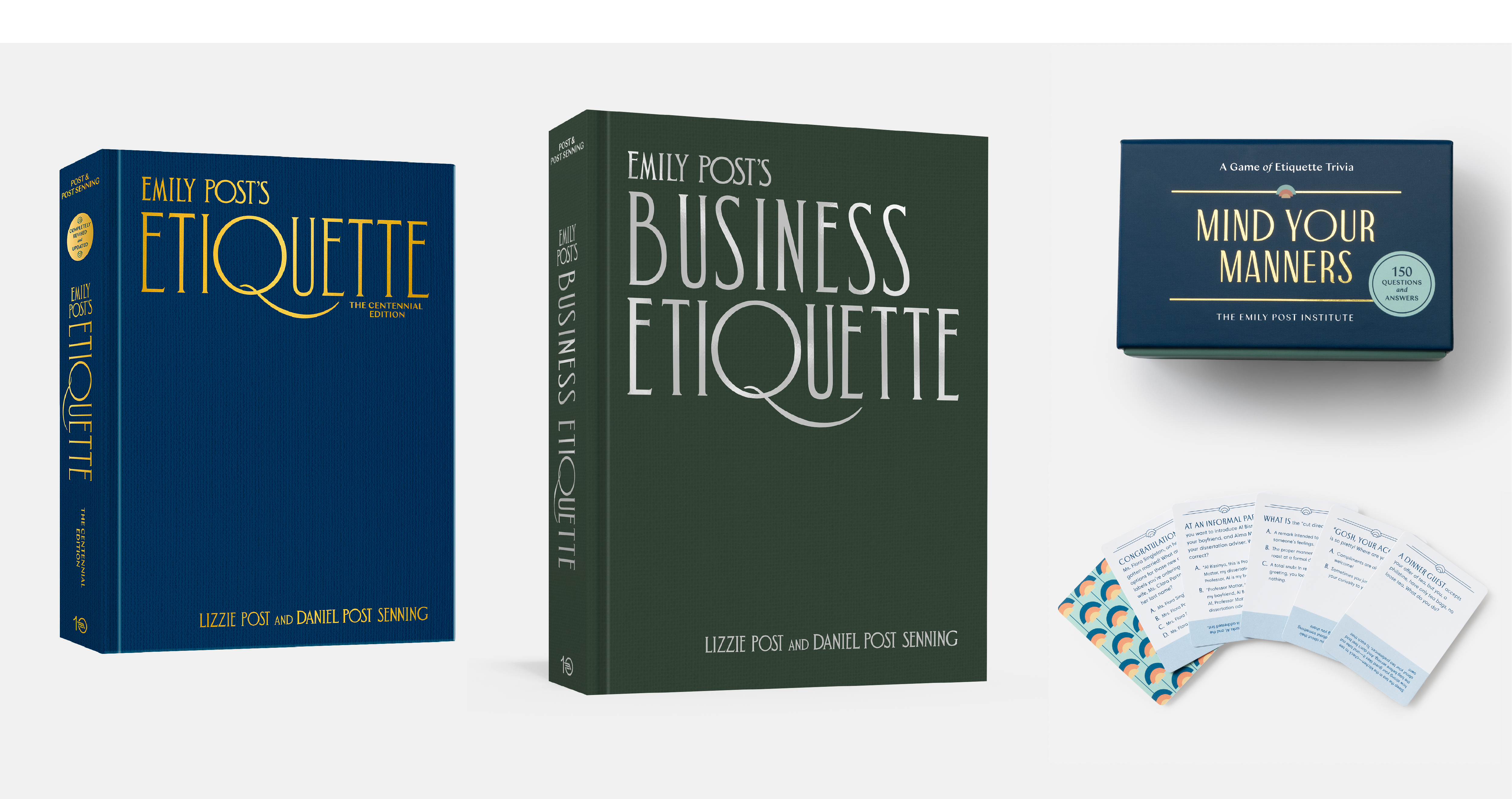
Signed copies of Emily Post’s Business Etiquette, Emily Post’s Etiquette - The Centennial Edition, and our Trivia Game: Mind Your Manners are all available and make for excellent gifts! Get your copies today from the fine folks at Bridgeside Books!
HELP TO KEEP EMILY POST PUBLISHING QUALITY CONTENT
If you enjoy Emily Post Etiquette and want to ensure we continue to create quality etiquette content and advice, please join our paid Community Membership. It is the most impactful way to contribute to the work we do at The Emily Post Institute. Your support makes a really big difference. Thank you!
FINAL CHANCE! The first 50 orders of Emily Post’s Business Etiquette through Bridgeside Books will receive a link to attend a live Professional Etiquette book talk for graduates with our very own Daniel Post Senning on June 25th.
We hope you’ve enjoyed today’s throwback. If you haven’t checked out the podcast this week, here’s the link. And if you haven’t checked out our newest podcast, Emily Post Wedding Stories, you can listen here. Keep an eye on your inbox for the Saturday Sip; it’s coming up next!
All our best,
Lizzie and Dan