
Etiquette Throwback 1922: Announcing Guests
Emily Post describes the protocol for announcing guests and persons of rank at a formal dinner

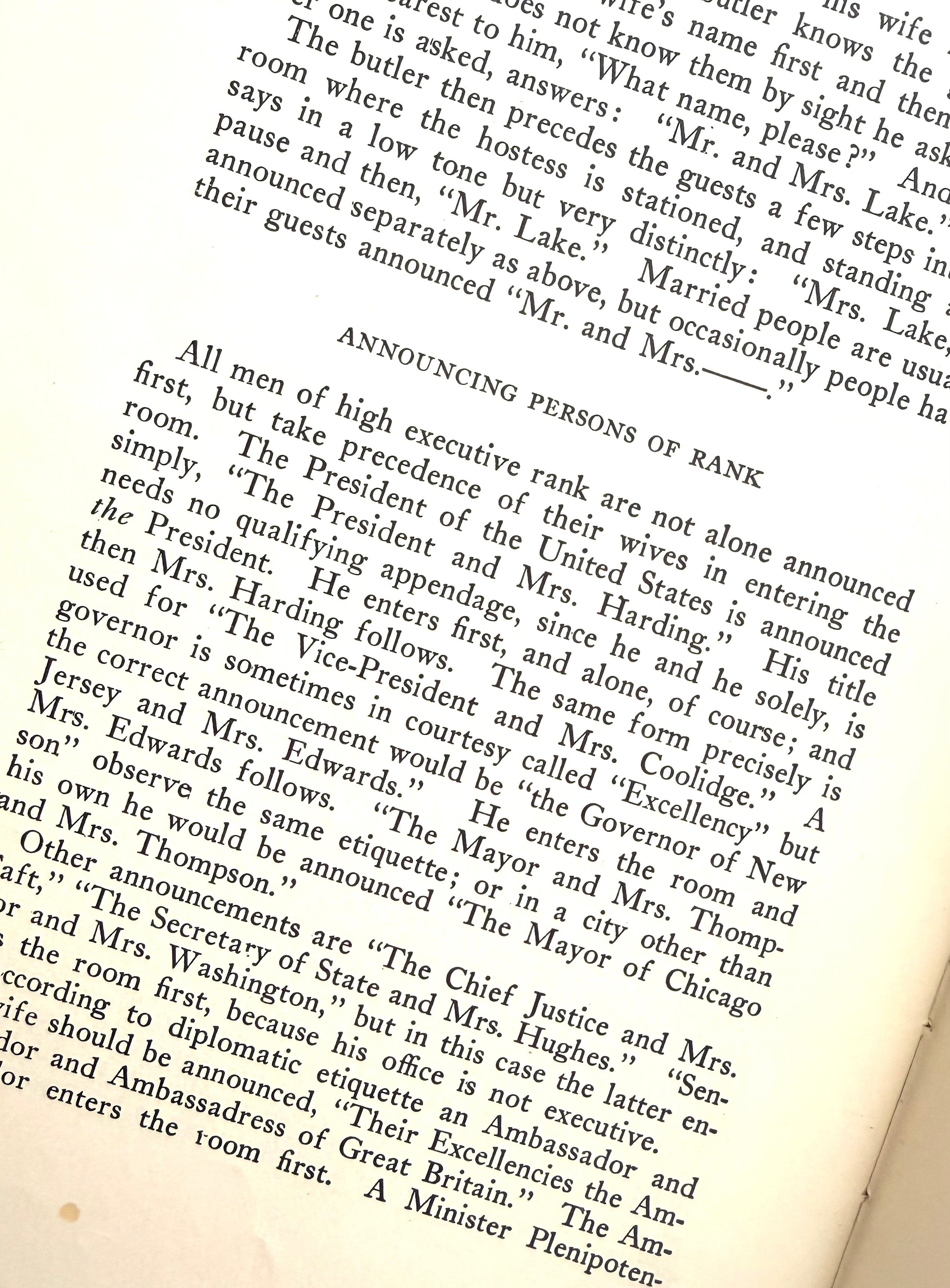
Etiquette, 1922, Announcing Guests & Announcing Persons of Rank
This is the second installment of our series on Formal Dinner etiquette from Emily Post’s 1922 edition of Etiquette. In it, Emily details how guests are announced to their host as a host prepares to “receive” them at the start of a formal dinner.
*Please note that the grammar, spelling, and attitude in the following excerpt follow late 20th-century standards, and we have included the excerpt as is, with any typos that were printed in the book at the time.
FORMAL DINNERS
Announcing Guests
Announcing Persons of Rank
pg 214-215
ANNOUNCING GUESTS
A gentleman always falls behind his wife in entering the drawing-room. If the butler knows the guests, he merely announces the wife’s name first and then the husband’s. If he does not know them by sight he asks whichever is nearest to him, “What name, please?” And whichever one is asked, answers: “Mr. and Mrs. Lake.”
The butler then precedes the guests a few steps into the room where the hostess is stationed, and standing aside says in a low tone but very distinctly: “Mrs. Lake,” a pause and then, “Mr. Lake.” Married people are usually announced separately as above, but occasionally people have their guests announced “Mr. and Mrs.——.”
ANNOUNCING PERSONS OF RANK
All men of high executive rank are not alone announced first, but take precedence of their wives in entering the room. The President of the United States is announced simply, “The President and Mrs. Harding.” His title needs no qualifying appendage, since he and he solely, is the President. He enters first, and alone, of course; and then Mrs. Harding follows. The same form precisely is used for “The Vice-President and Mrs. Coolidge.” A governor is sometimes in courtesy called “Excellency” but the correct announcement would be “the Governor of New Jersey and Mrs. Edwards.” He enters the room and Mrs. Edwards follows. “The Mayor and Mrs. Thompson” observe the same etiquette; or in a city other than his own he would be announced “The Mayor of Chicago and Mrs. Thompson.”
Other announcements are “The Chief Justice and Mrs. Taft,” “The Secretary of State and Mrs. Hughes.” “Senator and Mrs. Washington,” but in this case the latter enters the room first, because his office is not executive.
According to diplomatic etiquette an Ambassador and his wife should be announced, “Their Excellencies the Ambassador and Ambassadress of Great Britain.” The Ambassador enters the room first. A Minister Plenipotentiary is announced “The Minister of Sweden.” He enters a moment later and “Mrs. Ogren” follows. But a First Secretary and his wife are announced, if they have a title of their own, “Count and Countess European,” or “Mr. and Mrs. American.”
The President, the Vice-President, the Governor of a State, the Mayor of a city, the Ambassador of a foreign Power—in other words, all executives—take precedence over their wives and enter rooms and vehicles first. But Senators, Representatives, Secretaries of legations and all other officials who are not executive, allow their wives to precede them, just as they would if they were private individuals.
Foreigners who have hereditary titles are announced by them: “The Duke and Duchess of Overthere.” “The Marquis and Marchioness of Landsend,” or “Sir Edward and Lady Blank,” etc. Titles are invariably translated into English, “Count and Countess Lorraine,” not “M. le Comte et Mme. la Comtesse Lorraine.”
Oh, how we love the details! For couples where neither is an executive, and for those not holding titles, the lady is announced first, followed by the gentleman; however, the order reverses when persons of rank are present, and today that holds true regardless of gender. We do think it’s interesting when one person holds a rank, that the couple is announced together, but enter the room in stages.
Protocol experts in our audience, we would love to hear your take on how this is done today for formal dinners held at home as opposed to at official engagements, like the White House state dinner.
Please, share it with us in the comments. Can’t post? Sign up for a subscription today, or post on the Monday Podcast comment thread.
The Perfect Companion for Self-Improvement Goals in 2026!
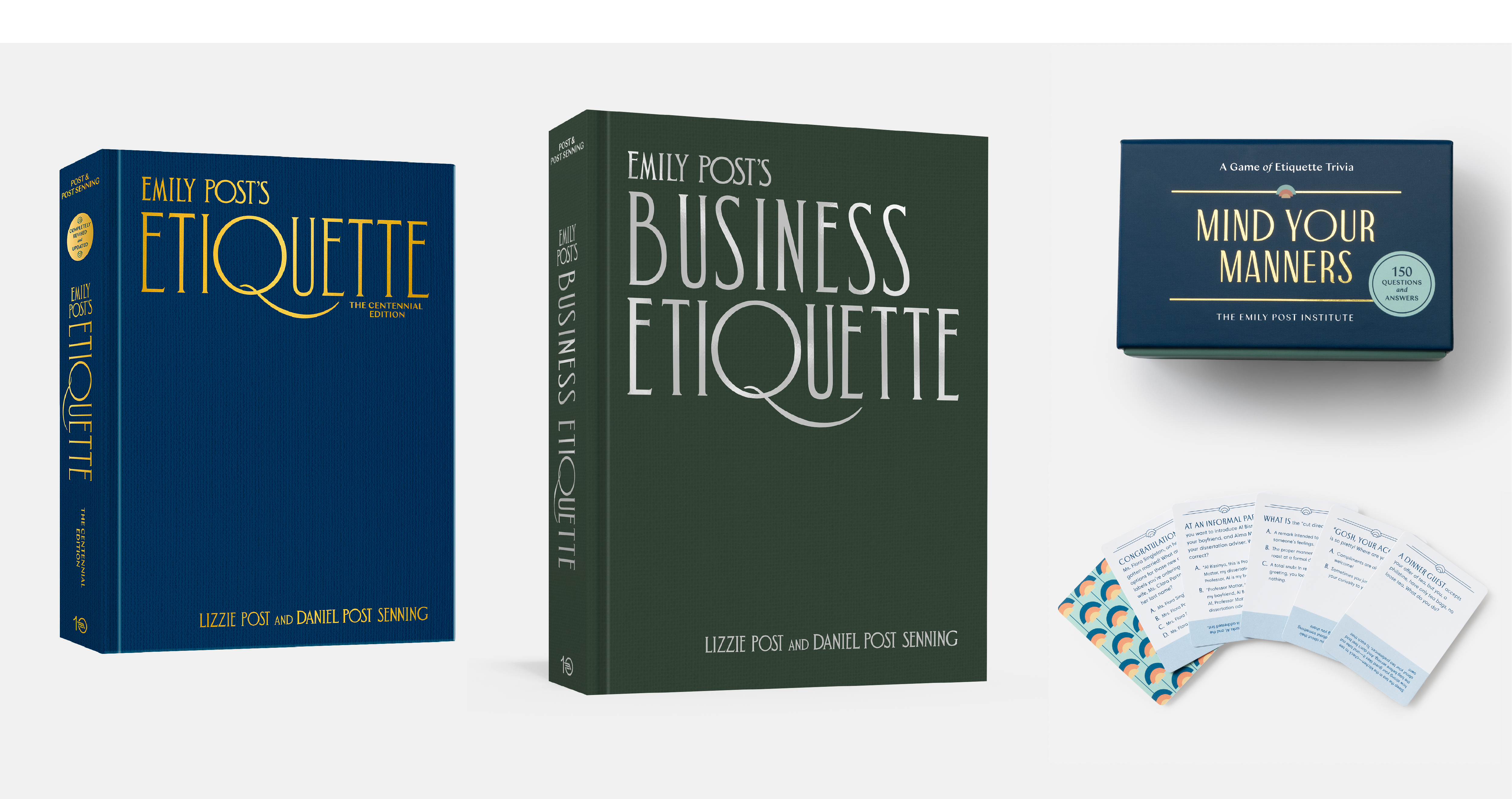
Signed copies of Emily Post’s Business Etiquette, Emily Post’s Etiquette - The Centennial Edition, and our Trivia Game: Mind Your Manners are all available and make for excellent gifts! Get your copies today from the fine folks at Bridgeside Books!
For those who order a Business Etiquette book through Bridgeside Books, you’ll receive a free sticky tab notebook with it! Perfect for marking pages and making notes. (While supplies last.)
HELP KEEP EMILY POST PUBLISHING QUALITY CONTENT
If you enjoy Emily Post Etiquette and want to ensure we continue to create quality etiquette content and advice, please join our paid Community Membership. It is the most impactful way to contribute to the work we do at The Emily Post Institute. Your support makes a really big difference. Thank you!
We hope you’ve enjoyed today’s step back in time. This was our second installment in our series from Emily’s 1922 edition chapter on Formal Dinners. If you haven’t checked out the podcast this week, here’s the link. Keep an eye on your inbox for the Saturday Sip; it’s coming up next!
All our best,
Lizzie and Dan
Check out our Community Member LIVE questions!
Dan and Lizzie have been using Substack LIVE features to bring Community Members podcast questions early and LIVE! If you’re not a Community Member, sign up today! Can’t sign up right now? Check out the recorded versions on YouTube!